
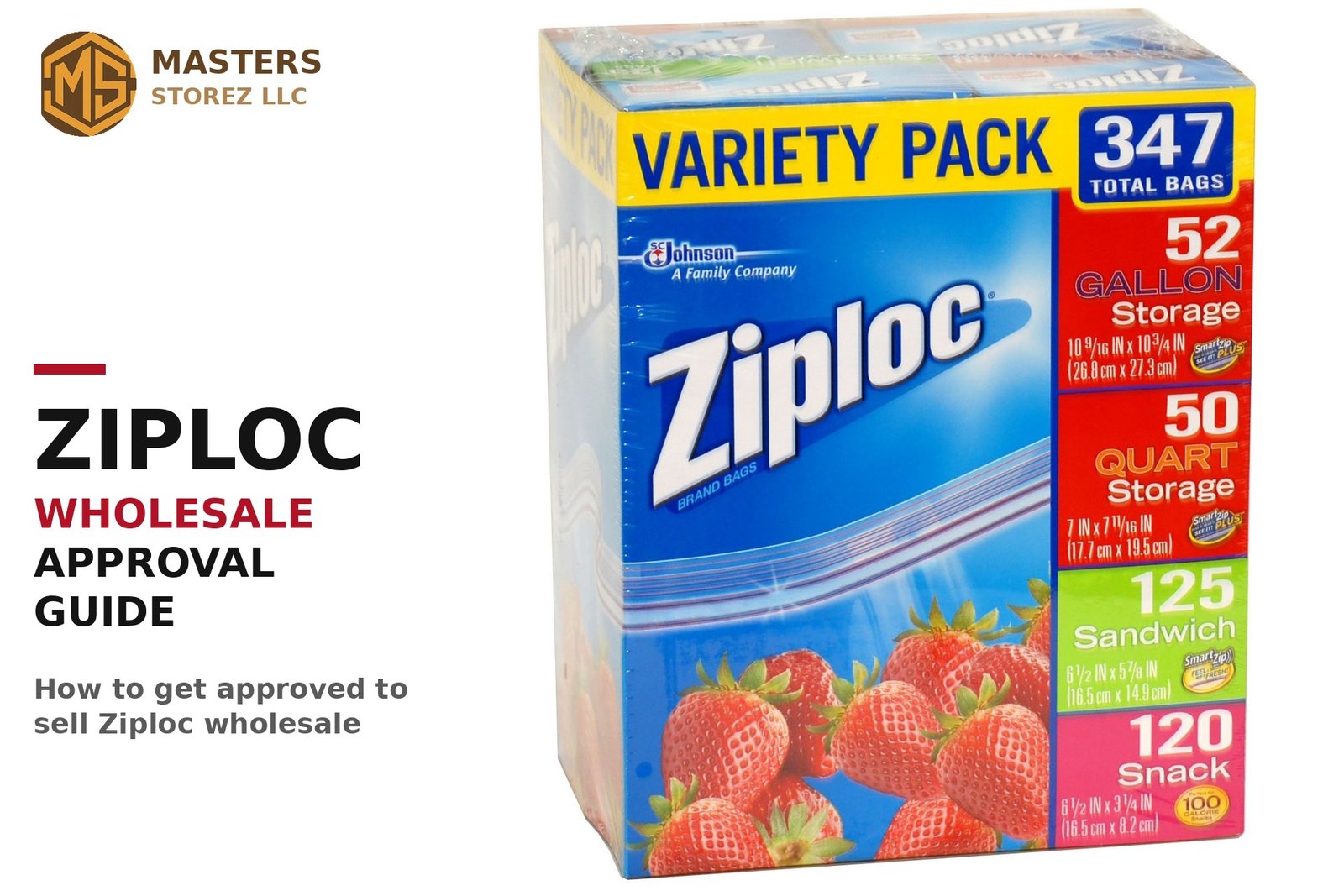
Ziploc is one of those brand names shoppers use as the name of the whole product. Ask someone for a resealable bag and they will say Ziploc, whatever brand is actually in the drawer. That recognition makes it an attractive line for a small reseller — and it also means the approval picture needs an honest answer before any money is spent. This Ziploc wholesale approval guide covers the product range, what we do and do not know about selling permission, and how to approach the brand’s parent company.
Ziploc: Brand Introduction
Ziploc began in 1968, when Dow Chemical launched a resealable plastic bag for food storage. The idea came from a zipper-like seal developed in the 1950s, but Dow was the company that turned it into a grocery product shoppers could buy in a box.
In 1997 Dow sold its consumer brands, including Ziploc, to SC Johnson, the family company behind Windex, Pledge, and OFF!. SC Johnson still owns the brand today. For a reseller, that matters because wholesale conversations run through SC Johnson’s trade channels rather than a standalone Ziploc office, .
Ziploc Wholesale Approval: Available Categories
The Ziploc range is built around resealable storage in several sizes and strengths. Sandwich bags and snack bags serve lunchboxes and portion control, quart and gallon storage bags cover leftovers and pantry goods, and freezer bags with a thicker build serve long-term storage. Slider bags with a pull tab are the premium version, easier to open and close for shoppers with limited grip strength.
Beyond bags, the brand sells reusable containers with lids, divided containers for meal prep, and specialty bags for produce and vacuum-style storage. A small reseller should start with the sizes that move fastest: gallon storage bags, quart storage bags, and freezer bags in the standard and slider versions. Those three cover the daily uses that drive repeat buying.
Selling Permission: Where You Can Sell Ziploc
Here is the honest position: Ziploc’s Amazon status is UNCLEAR in our batch research. We found no entry for the brand on the intellectual-property complaint and risk lists we checked, and no brand-specific gating evidence either way. That is not the same as an approval. It means we cannot tell you that Amazon will accept a listing, and we cannot tell you that it will refuse one.
What that means in practice is simple: do not list Ziploc on Amazon until you have written confirmation from the brand or an authorized distributor that the channel is allowed for your account, and do not buy stock for Amazon until that confirmation exists. Buy through an authorized distributor, keep every invoice, and ask in writing whether a letter of authorization is available — it is the document Amazon asks for when a brand gate appears. Confirm the position for Amazon, eBay, and Walmart in writing first rather than guessing. Our wholesale products for Amazon FBA guide explains how gated and ungated lines differ in practice.
How to Get Ziploc Wholesale Approval by Email
There is no dedicated Ziploc wholesale contact page. The verified official route is the Ziploc website itself, linked in the contact section below, which carries a “Get in touch” form. Use that form to send a short, professional inquiry: introduce your business by its legal name, state that you are a small US reseller, and say you want to buy Ziploc wholesale for resale.
Include the details a supplier checks first: your business name, your EIN, your resale certificate, your store type (online, retail, or both), and a realistic estimate of your order volume, such as how many cases per month you expect to move. Ask three direct questions: what the distributor requirements are for a small account, whether a letter of authorization is available for Amazon, and whether there are any marketplace restrictions on the brand. Attach your resale certificate and business registration if the form allows it, and keep a copy of the message you sent. Our guide to getting a resale certificate explains the document step by step.
Ziploc Brand Reviews and Market History
Ziploc has been selling since 1968, which is more than five decades in American kitchens. The brand’s strength is that it solved a small daily problem — keeping food fresh and stopping leaks — with a product so simple that shoppers never needed instructions. That simplicity is why the name became the word for the whole category, and why the bags still sell in every grocery store in the country.
We do not publish ratings, scores, or market-share statistics for the brand, because those numbers change and we will not present estimates as facts. What matters for a reseller is the pattern behind the history: a product bought weekly, used daily, and replaced constantly creates repeat demand that does not depend on trends. Before you pay any supplier, read our guide to verifying wholesale products are authentic so the bags you receive are genuine Ziploc and not a lookalike.
How to Contact Ziploc
The only verified official contact route for this article is the Ziploc homepage, which carries the brand’s “Get in touch” form: https://ziploc.com/en-us
Use that form to send your wholesale inquiry. If the reply directs you to SC Johnson’s trade team or a regional distributor, follow that referral and keep copies of your messages, invoices, and any authorization letter you receive.
Ziploc is a strong brand with an open question attached to it, and the right move is to get that question answered in writing before buying stock for a marketplace. Contact the brand through its official form, present your business documents, and confirm the selling position first. If you would like help planning a first household order or checking a storage brand with a clearer marketplace path, write to us at ceo@mastersstorezllc.com. Browse our homepage categories to see where Ziploc sits among the home and kitchen lines we cover.