
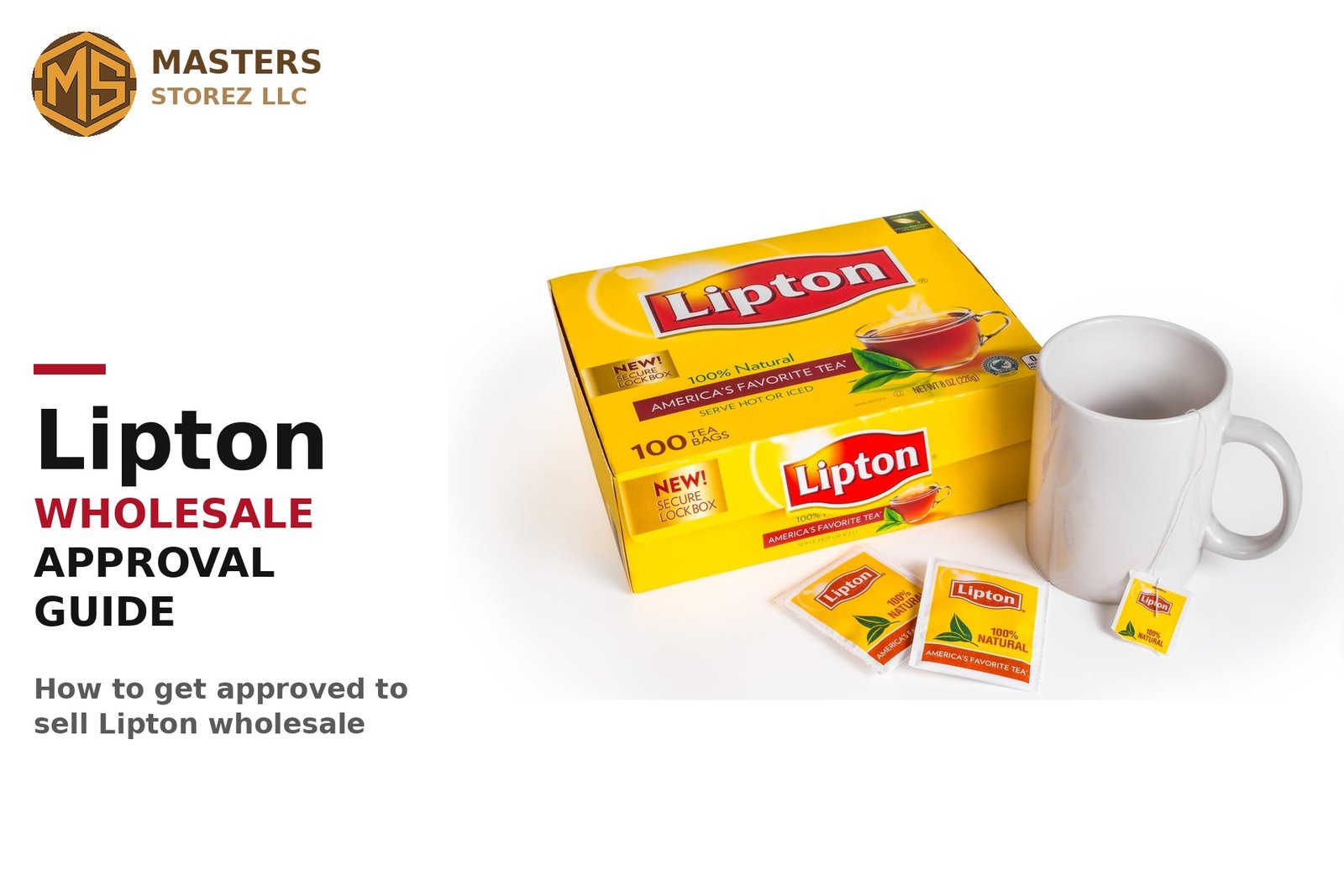
Lipton is the best-known tea brand in the United States, and tea is a steady, everyday line with long shelf life and low returns. Getting Lipton wholesale approval is more straightforward than for many big brands, because the brand is not on Amazon’s restricted or intellectual-property complaint lists — and unlike most brands in this series, it has a dedicated professional channel for business buyers. This guide explains how Lipton wholesale approval works and how to use that channel.
Lipton Wholesale Approval: Brand Name and Introduction
Lipton is a tea brand owned by Lipton Teas and Infusions, a company created in 2022 when Unilever sold its global tea business to CVC Capital Partners. The brand itself goes back much further: Thomas Lipton, a grocer from Glasgow, Scotland, opened his first shop in 1871, and in 1890 he bought tea gardens in Ceylon, now Sri Lanka, and began packaging and selling the first Lipton tea under the slogan “direct from the tea garden to the teapot.” For a reseller, the important point is that Lipton has a professional division, Lipton Professional, which serves hotels, restaurants, cafés and workplaces — and that is the most direct wholesale route for a small business buyer.
The Brand’s Available Categories
The Lipton range a small reseller can carry starts with black tea: Lipton Yellow Label in tea bags, loose leaf and family-size packs, plus Black Tea in single-serve cups for offices and cafés. Lipton Professional adds foodservice formats: bulk tea bags, portion packs and dispenser systems made for hotels, restaurants and workplaces. A first order built around Yellow Label plus two or three herbal and green varieties is a safer start than a deep range across every flavour.
Selling Permission — Which Platforms Lipton Allows
Lipton is absent from Amazon’s restricted and intellectual-property complaint lists, which is good news for a small seller: there is no brand gating standing between you and an Amazon listing. That does not mean Amazon is automatic — tea is a food product, so Amazon applies its usual rules on expiry dates and proper storage — but there is no Lipton-specific approval wall to climb. The same applies on eBay and Walmart: Lipton can be listed on both, provided the stock was bought from a legitimate wholesale source and the invoices are kept. Your own online store is the simplest starting point, and it is also where tea sells well in variety bundles and gift sets. Our guide to verifying wholesale products are authentic explains what to check before you pay a supplier, and our wholesale tea minimum order quantity guide explains how tea orders are usually sized.
Approval Method — How to Email Lipton for Wholesale Approval
Lipton wholesale approval starts with the Lipton Professional channel, which is the brand’s business route. Visit the Lipton Professional page and use its local-contacts link to find the contact for your area. Then send a written enquiry through that contact route. Include your registered business name, your EIN, your resale certificate, the type of store or business you run (online store, grocery store, café supplier or workplace supplier), the Lipton products you want to carry, and a realistic estimate of your order volume. Ask directly whether you need to buy through an authorised distributor, what the minimum order is for the professional range, and whether a letter of authorisation is available if you want to sell on Amazon. If the reply points you to a local distributor, follow that route and open the distributor account first; the distributor becomes your source of stock and your source of invoices. Keep a copy of every reply, and make sure your resale certificate is in order before you apply — our guide to getting a resale certificate covers the steps.
Brand Reviews — How Good Is Lipton, and How Long Has It Been in the Market
Lipton tea has been on sale since 1890, more than 135 years, and it is the best-known tea brand in the United States. That long history is the brand’s main strength for a reseller: customers ask for Lipton by name, and a store that stocks it does not have to convince anyone to try the product. The brand’s strength is its position as an everyday tea — Yellow Label is the tea most American households buy, and tea bags are a repeat purchase that keeps customers coming back to the same store. The trade-off is the same as with any mass-market brand: margins on the standard boxes are thin, and the money is made on volume and on selling the green and herbal varieties alongside the original. For a small reseller, Lipton is a reliable traffic line with steady weekly demand and a dedicated professional channel that most grocery brands do not offer.
How to Contact Lipton
The verified official route is the Lipton Professional page: https://www.liptonteas.com/professional/ — this is the brand’s page for hotels, restaurants, cafés and workplaces, and it carries a local-contacts link for business enquiries in your area. There is no public wholesale signup page for Lipton retail tea, so use this professional page and its local-contacts route, and state clearly that you are a reseller asking about wholesale supply.
Lipton is one of the friendlier big brands for a small reseller: no Amazon gating, steady weekly demand, long shelf life and a professional channel built for business buyers. If you would like a hand putting together a first grocery order around approved brands, write to us at ceo@mastersstorezllc.com. Browse our homepage categories to see the grocery lines we cover for small US resellers.