
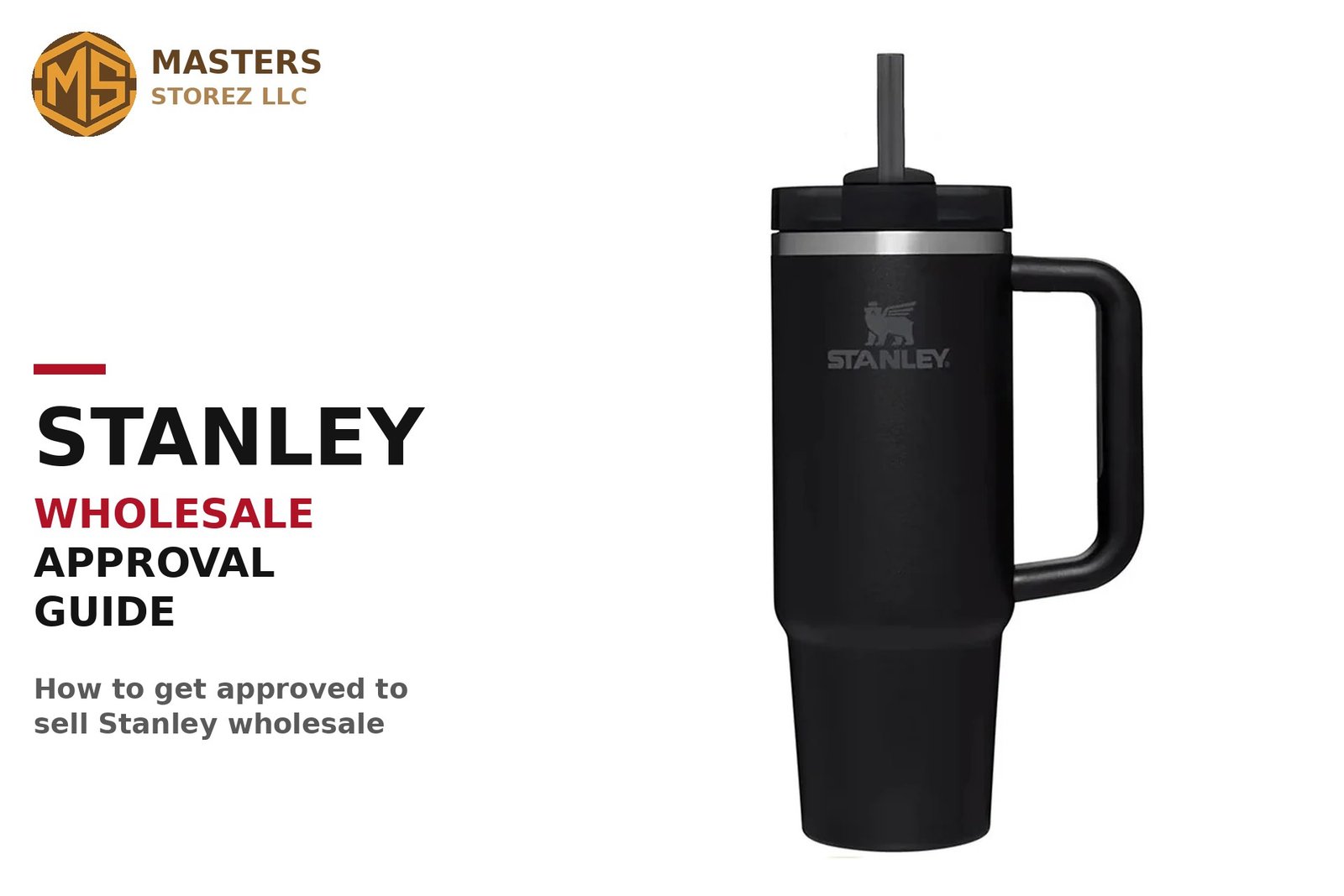
Stanley is the drinkware brand behind the tumbler craze of recent years, and its bottles and cups are now carried everywhere from construction sites to school runs. That demand makes Stanley a tempting line for a small reseller. But Stanley is also a brand with real complications: the only verified dealer-inquiry page we found is on the Canadian site, the name is shared with a separate tool brand, and the famous cups face heavy counterfeit enforcement. This guide explains how Stanley wholesale approval works, what the brand sells, where you are allowed to sell it, and how to make a proper approach through the brand’s own dealer channel.
Stanley: Brand Name and Introduction
Stanley, in this guide, means Stanley 1913, the drinkware brand owned by Pacific Market International (PMI), a Seattle-based company that acquired the Stanley brand rights in 2002. For most of its history Stanley was a workman’s brand, trusted on job sites and in the outdoors. For a reseller, Stanley is attractive because demand is high and the products carry strong price points. The complication is that the brand is now one of the most counterfeited drinkware names on the market, so buyers and platforms both check authenticity closely.
Stanley’s Available Categories
Stanley’s range is built around insulated drinkware, with several clear groups a reseller should know. Tumblers are the leading group, headed by the Quencher series in a range of sizes, colours and finishes. Bottles form a second group, including the classic vacuum bottle that started the brand, along with modern water bottles and flasks. Mugs, food jars and lunch containers cover hot drinks and meals on the go. Stanley also sells coolers and outdoor drinkware, along with barware, growlers and a growing range of accessories such as lids, straws and carry handles.
Selling Permission: Stanley Wholesale Approval on Amazon, eBay and Walmart
The honest answer for Stanley is that Amazon approval is unclear, and a reseller should be careful for two separate reasons. First, the evidence is mixed: the brand is rated only “Some Risk” rather than aggressive, which is a better position than the hard-blocked brands, but Stanley cups face heavy counterfeit enforcement, so Amazon checks listings closely. Second, do not confuse Stanley drinkware with Stanley tools: the “Stanley (basic tools)” entry on auto-ungate lists refers to Stanley tools, a different company, and it does not apply to PMI tumblers and bottles. We could not verify a clear yes or no for Stanley drinkware from the batch data, so treat Amazon as uncertain: apply with full paperwork, genuine stock from an authorised source, and be ready to show a letter of authorisation if Amazon asks for one.
Approval Method: How to Email Stanley for Wholesale Approval
Stanley handles dealer enquiries through a dealer-inquiry page, but there is an important honesty note here: the only verified dealer-inquiry URL we found is on the Canadian site, and no United States dealer-inquiry page was verified for this guide. That means a US reseller should use the Canadian dealer-inquiry page as the starting point and ask to be connected with the US trade team, rather than assuming a separate US form exists. Start by preparing your business paperwork: your registered business name, your EIN, your resale certificate, the type of store you run, your website or storefront details, and a realistic estimate of your order volume. Then submit the dealer inquiry, stating clearly which product groups you want — tumblers, bottles or food jars — where you will sell them, and how much you expect to order. Ask directly about distributor requirements, minimum order quantities, US dealer terms, and whether a letter of authorisation is available for Amazon, since that letter is the document Amazon is most likely to ask for given the counterfeit enforcement around this brand.
Brand Reviews: How Good Is Stanley, and How Long Has It Been in the Market?
Stanley traces its history to 1913, when William Stanley Jr. invented the all-steel vacuum bottle, giving the brand more than a century of history. The original bottle was built for workers who needed a flask that would not break, and that reputation for toughness still defines the brand today. The thing to weigh is not the product quality, which is well established, but the risk around the brand. Counterfeits are common, enforcement is heavy, and the dealer route for US sellers is not clearly published, so a small reseller should only stock Stanley through a verified authorised source.
How to Contact Stanley
The verified official route is the Stanley dealer-inquiry page, which is on the Canadian site: https://ca.stanley1913.com/pages/dealer-inquiry?srsltid=AfmBOooBXh3BYUamatKzTS71ur7mQsml0qyg8qAKEtVHdInfL6CaWkNe. Use that page to submit a dealer inquiry and ask to be connected with the United States trade team. We could not verify a United States dealer-inquiry page, so do not rely on a US form or email address found elsewhere. Include your business name, EIN, resale certificate, store type and expected order volume in your inquiry. Masters Storez LLC is not an authorised Stanley distributor, and this guide does not claim any partnership with Stanley or PMI. If you would like help planning a general merchandise order around the brands you can already sell, write to us at ceo@mastersstorezllc.com, and browse our homepage categories to see the lines we work with. See our wholesale general merchandise guide before you approach the brand.
Stanley is a high-demand brand with a century of history, but it is also one of the riskiest brands in this series for a small reseller: heavy counterfeit enforcement, a mixed Amazon picture, and no verified US dealer page. If you would like a hand working out which general merchandise brands fit your budget and your sales channels today, write to us at ceo@mastersstorezllc.com.